Island life
The best beaches in Lanzarote
Calm family bays, golden coves and the wild surf of the north. Which beach to choose, and why the wind decides more than you would think.
24 July 2026 · 5 min read
Lanzarote has beaches for every mood, from long golden family stretches with a café behind them to wild, empty sweeps of sand under towering cliffs. The trick to enjoying them is understanding one thing: on this island, which way a beach faces matters more than how it looks in the photo. Get that right and you will always be on the sheltered, swimmable side; get it wrong and you will spend the afternoon with sand in your sandwiches.
Here is how to choose, and the beaches worth knowing.
First, read the wind
Lanzarote is a breezy island, and the wind almost always favours one coast over the other. The north and west take the brunt of the Atlantic, which makes for dramatic surf and wide, wild beaches, wonderful to look at and to walk, less ideal for a calm swim. The south and east sit in the shelter of the land, where the water stays warmer and gentler.
So before you pick a beach, notice which way the wind is blowing and head for the sheltered side. On an island this small you are never more than half an hour from the calm coast, so there is rarely a reason to suffer a windy one.
The easy resort beaches
If you want sand, shallow water, lifeguards in season and a café never far away, the resort beaches are the reliable choice, and they are genuinely good.
- Puerto del Carmen has a long run of golden beaches right along the front, easy to reach and family-friendly, with everything you need a few steps behind you.
- Costa Teguise has a cluster of sheltered, shallow bays, including a well-known one that is a favourite with families and beginner windsurfers.
- Playa Blanca in the south has a string of calm, clean little beaches along its promenade, with the added bonus of some of the warmest, most sheltered water on the island.
These are the ones to head for with small children or when you just want an easy day.
The golden coves of Papagayo
For many people these are the island’s best. Tucked into the protected headland of Los Ajaches near Playa Blanca, the Papagayo beaches are a series of golden-sand coves in turquoise, sheltered water, backed by low cliffs. They are beautiful and calmer than almost anywhere.
The trade-off is access and facilities: you reach them down a bumpy dirt track, there is usually a small charge to drive in, and there is little or nothing in the way of shops or shade, so bring everything, water especially. Some of the smaller coves are quietly clothing-optional, so pick your spot to suit. Go early for the best of them before the day boats and the crowds arrive.
Wild and beautiful: Famara
Playa de Famara, on the north-west coast, is the island’s showstopper: an enormous sweep of sand several kilometres long, under the dramatic Risco de Famara cliffs, with the little island of La Graciosa out to sea. It is a magnet for surfers, kitesurfers and paragliders, and at sunset it is unforgettable, the wet sand turning to a mirror as the cliffs catch the last light.
Be honest with yourself about the water, though. This is the open Atlantic, with real waves, currents and a strong undertow, so it is a place to paddle, walk, surf with a school and soak up the scenery rather than let small children swim freely. Respect it and it is one of the great beaches anywhere.
The quieter corners
If you like a beach with fewer people, the island rewards a little exploring. The far north around Órzola has some lovely small white-sand beaches tucked among the rocks, calm on the right day. And if you are willing to take the short ferry across to La Graciosa, you will find some of the emptiest, most beautiful beaches in the whole of the Canaries, worth the trip on their own.
What to bring, and a note on the black sand
Whichever you choose, pack for the island: high-factor sun cream and a hat, because the sun is stronger than it feels in the breeze, plenty of water for the beaches with no facilities, and a windproof layer for the exposed ones. A pair of water shoes is worth it too, as some of Lanzarote’s beaches are volcanic pebble or dark grey and black sand rather than soft gold, which is striking to look at and hot underfoot in summer. There is a full rundown in what to pack for Lanzarote.
Seeing the coast a different way
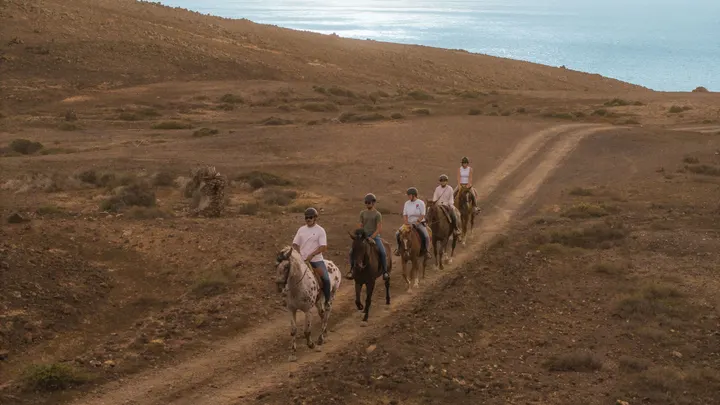
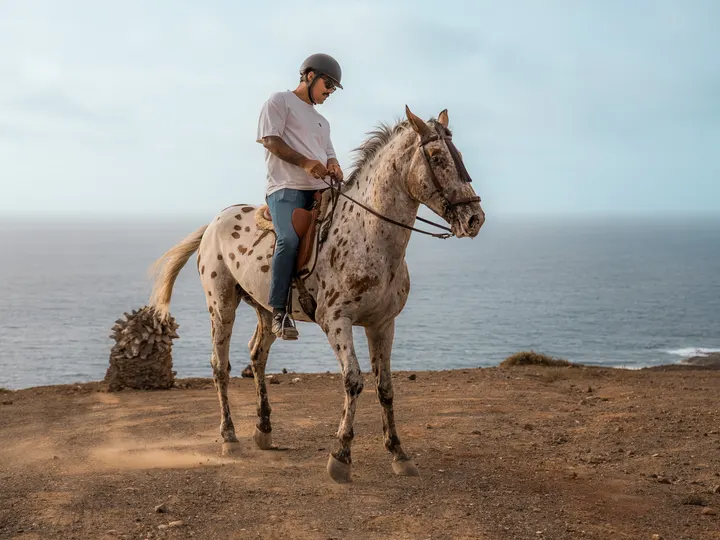
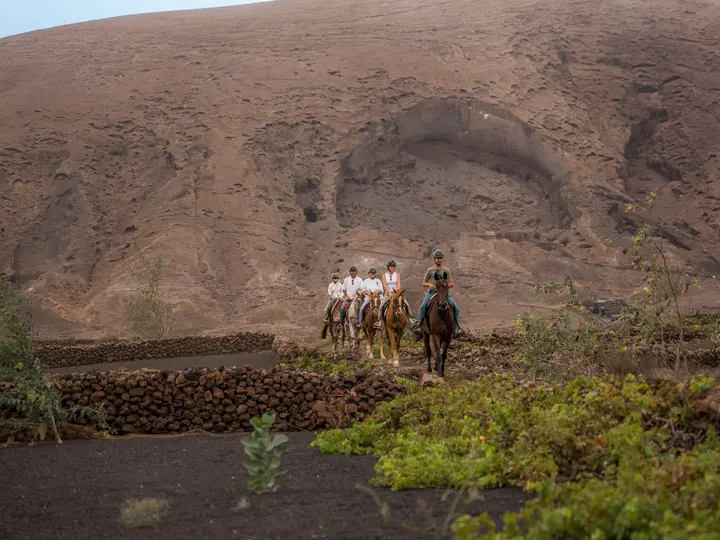
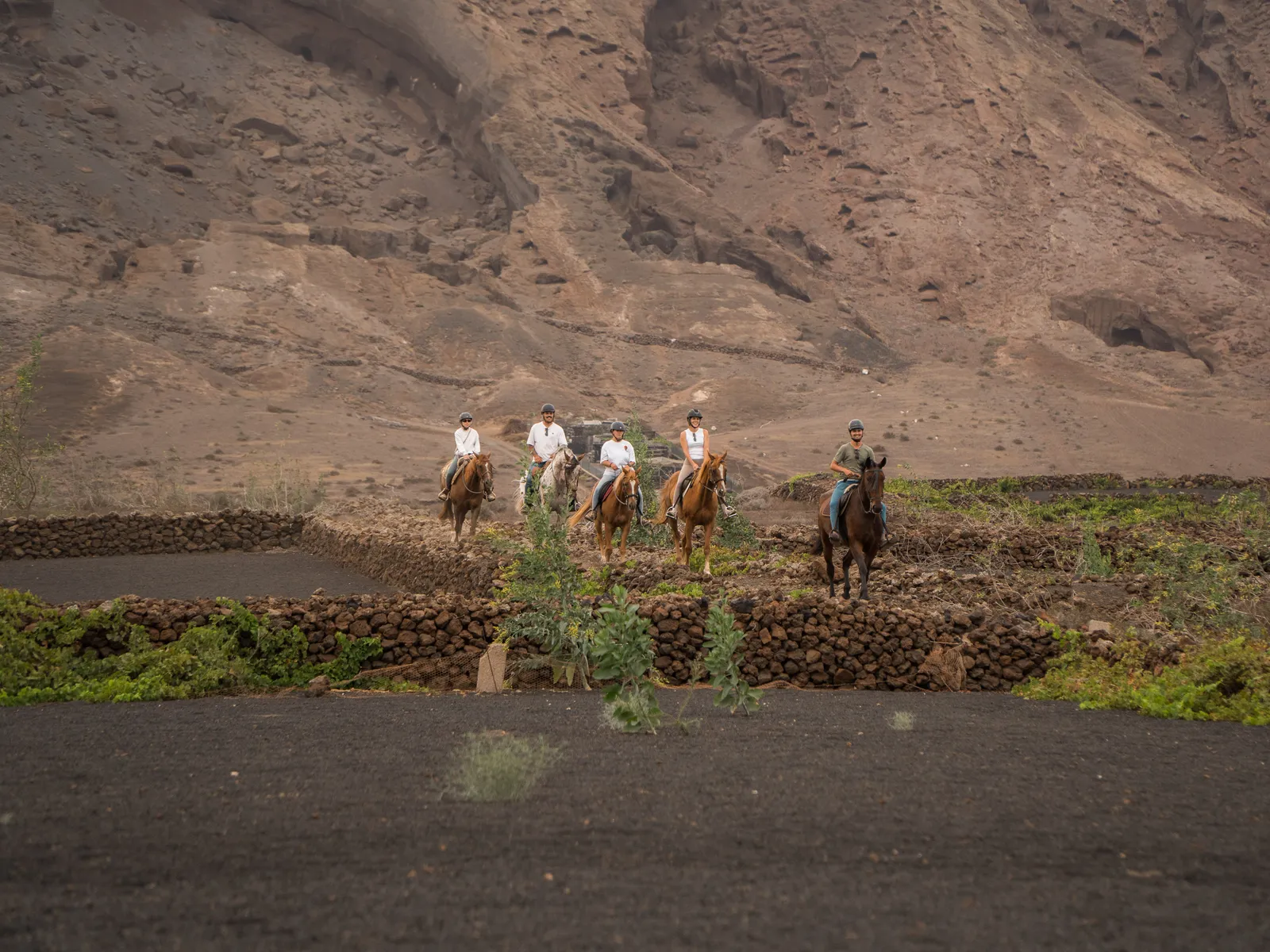
There is one more way to enjoy the Lanzarote coast that most visitors never consider, which is from the back of a horse, out along the shore with the sea beside you. It is a strange and lovely thing, and it is the reason the 2-hour ride, which heads out with the sea and the volcanoes in view, is the one people talk about most afterwards. No experience is needed, and even if you have never ridden, walking a calm horse with the sea in view is a gentle way to start.
Whatever kind of beach day you are after, Lanzarote almost certainly has it. Just check the wind first, head for the sheltered coast, and save the wild ones for a walk and a sunset.
If you fancy it