Island life
Where to watch the sunset in Lanzarote
On an island this shape, the sun sets over the sea almost everywhere. The places worth timing your evening around, and how to make the most of them.
21 May 2026 · 5 min read
Because of the way Lanzarote sits, the west coast faces the open Atlantic with nothing between it and the horizon, and that means the sun goes down over the sea from a good part of the island. You do not need a secret spot to catch a beautiful sunset here. But a few places turn a nice evening into the one you actually remember, and knowing where to be, and when, is the difference between catching it and just missing it.
Here is where to go, and how to do it properly.
First, time it right
The hour the sun sets swings a lot through the year, from around six in the evening in the depths of winter to close to nine at the height of summer. So the first job is a two-second check of the day’s sunset time, because turning up at seven in December means you have missed it by an hour.
Then aim to be in place a good twenty to thirty minutes before that time. This is the mistake most people make: they arrive as the sun touches the horizon and leave as it drops. But on a clear evening the best colour often comes in the ten or fifteen minutes after the sun has actually gone, when the whole sky lights up behind it in pinks and deep oranges. Bring a layer, because once the sun is down the temperature and the wind both make themselves known quickly, and stay a little longer than feels natural. The reward comes to the people who wait.
The clifftops in the north
The high ground in the north of the island gives you the long, cinematic view. From the Mirador del Río, a viewpoint carved into the top of the Famara cliffs, the land falls away hundreds of metres to the sea, with the little island of La Graciosa laid out below and the whole western sky opening up in front of you. It is exposed and it can be genuinely windy up there, so wrap up, but on a clear evening there are few better places on the island to stand still for half an hour.
The green lagoon at El Golfo
On the west coast, the small fishing village of El Golfo sits beside one of the island’s strangest sights: a vivid green lagoon, the Charco de los Clicos, cupped in a half-eroded crater against black volcanic sand and dramatic red-brown cliffs, with the Atlantic crashing just beyond. It is one of the most photographed spots in Lanzarote for good reason, and the low evening light makes the greens and reds even richer and odder. Get there early enough to walk down to the viewpoint and find your spot before the light show starts, then stay for dinner: El Golfo is known for its seafront fish restaurants, and eating grilled fresh fish while the sky burns out over the water is a hard evening to beat.
Los Hervideros, where the sea meets the lava
A little along the same coast, Los Hervideros is where old lava flows met the ocean and froze into a maze of cliffs, arches and blowholes. On a big swell the Atlantic thunders up through the rock and explodes out of the caves, and in the last light of the day the whole black coastline glows. It pairs perfectly with El Golfo, as the two are minutes apart, so a lot of people string them together into one slow evening along the west coast.
The salt flats at Janubio
Also on this stretch, the Salinas de Janubio are a working set of salt pans, a geometric patchwork of shallow pools that catch the colour of the sky as the sun drops. It is quieter and less obvious than the big-name spots, which is part of the appeal, and photographers love the reflections. If you want a sunset without a crowd, this is a good bet.
A beach for the last light
If you would rather have sand under your feet than a viewpoint car park, the long beaches on the north and west coast are hard to beat as the day ends. Famara is the great one: an enormous sweep of sand under towering cliffs, with the surf rolling in and endless room to spread out well away from anyone else. As the sun goes down the wet sand turns into a mirror and the cliffs catch fire behind you. It is the kind of evening that does not need a plan beyond turning up and walking.
Sunset from the saddle
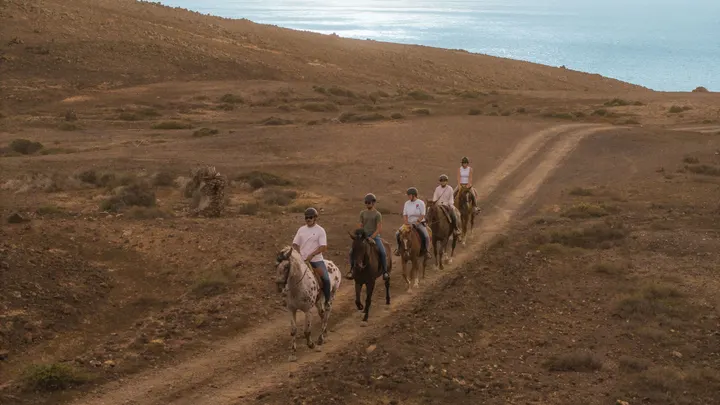
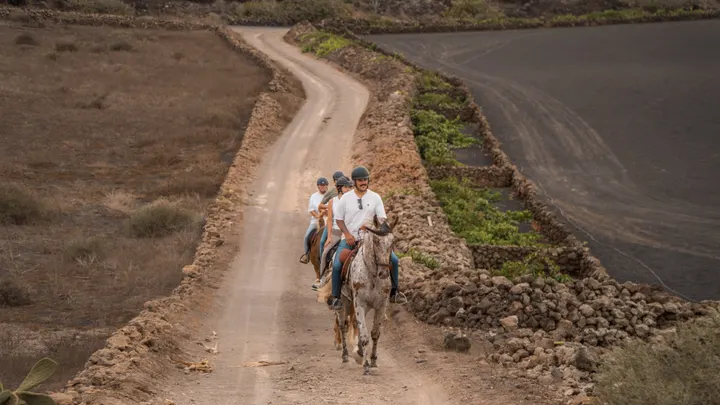
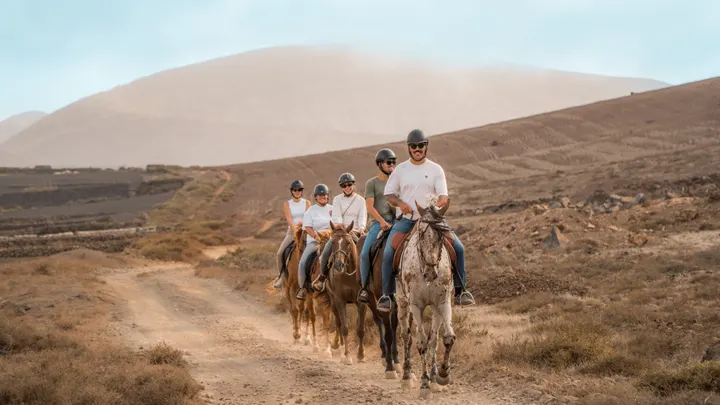
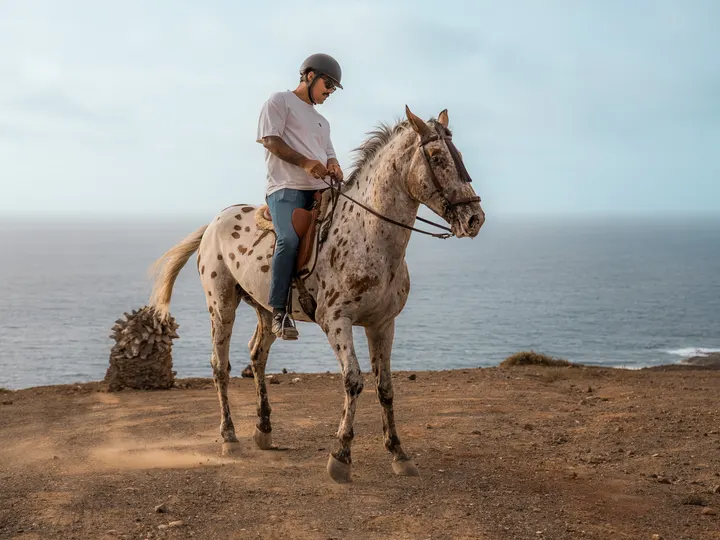
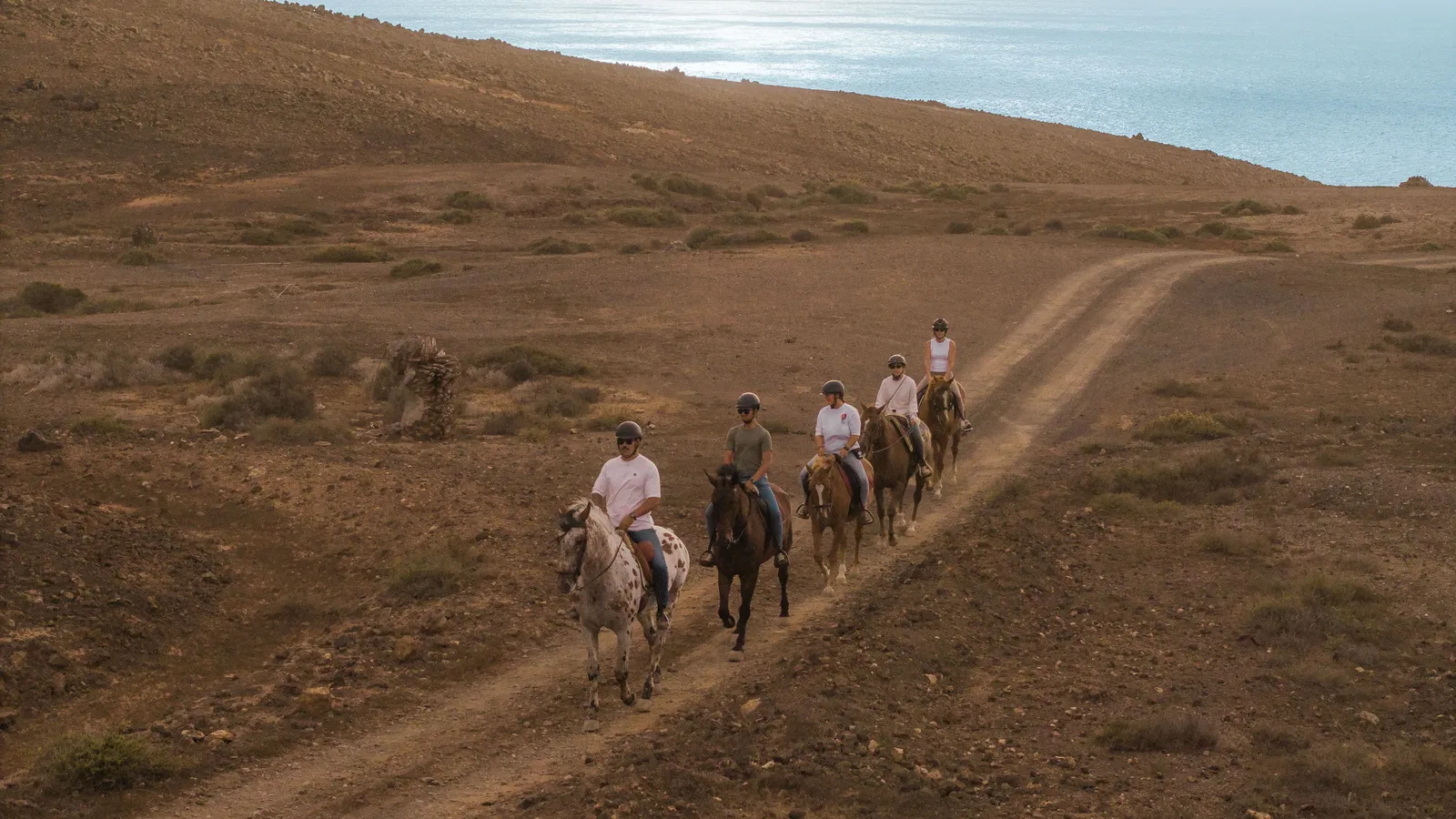
There is one way to watch the light change that most visitors never think of, which is from the back of a horse, out with a small group as the day cools. It is unhurried and quiet in a way a viewpoint car park never quite is. Our 2-hour ride heads out with the sea and the volcanoes in view, and an afternoon out on horseback is a lovely way to end a day, with the light going long and gold across the land. No experience is needed to come along, and if you have never ridden a horse in your life, a gentle walk out into the evening is about the kindest possible way to do it for the first time.
A few practical notes
- Check the day’s sunset time before you set off. It moves by nearly three hours across the year.
- Bring a warm layer and, if you are heading to a clifftop, something that cuts the wind.
- A head torch or a phone light is worth having for the walk back to the car once the light has gone, especially on the rougher tracks out to places like Papagayo or Janubio.
- Fill the tank and grab a bite beforehand if you are heading to the quieter spots, where facilities are thin on the ground.
Wherever you end up, the rule is always the same: get there early, bring a layer, and stay a little longer than you planned. On Lanzarote the best of the sunset almost always comes after you think it is over.
If you fancy it