Volcanoes & coast
Lanzarote's volcanic landscape, and how to see it
Black lava, craters on the skyline, and vines grown in ash. Why the island looks like nowhere else on earth, and how to get out into it properly.
8 July 2026 · 5 min read
People arrive in Lanzarote expecting a beach island and are quietly floored by the middle of it. Much of the island is volcanic, and in great stretches the ground is black and rust-red lava for as far as you can see, with the smooth cones of old craters lining the horizon. It is the thing that stays with most visitors long after the tan has faded, and it is worth understanding a little, because the more you know about how it got here, the more the landscape opens up in front of you.
An island made of fire
Lanzarote was reshaped by a long series of eruptions between 1730 and 1736, when dozens of new volcanoes tore open across the island over six years. It is recent enough, in geological terms, that much of the lava has barely weathered. Whole villages and some of the most fertile farmland were buried, and what was left behind is the landscape you see today: fields of frozen black rock, ash the colour of rust, and craters you can walk up to the rim of.
At the heart of it is the Timanfaya National Park, the Montañas del Fuego, or fire mountains, in the west. The eruptions there are long over, but the ground a little below the surface is still hot enough that the park demonstrates it for visitors, pouring water into the earth to send up a burst of steam, and grilling food over the natural geothermal heat. Standing in that raw, silent, Mars-red landscape is one of those travel moments that resets your sense of what a place can look like.
Vines grown in ash
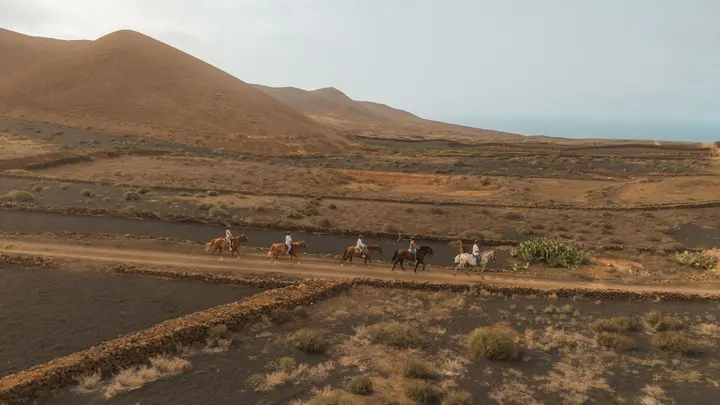
The most surprising thing the islanders did with all that volcanic ash was farm it. In the wine country of La Geria, each vine sits in its own scooped hollow in the black gravel, often sheltered behind a low, curved dry-stone wall that keeps the relentless wind off. There is very little rain here, so the trick is ingenious: the porous black ash, called picón, soaks up the moisture from the night air and the dew and feeds it slowly down to the roots.
The result is a landscape of thousands upon thousands of these little pits marching across the slopes, strange and beautiful and completely man-made, that produces a genuinely good local wine, much of it from the malvasía grape that the island is known for. A slow morning driving or cycling through La Geria, with a stop at a bodega to taste what comes out of all that black ground, is one of the most distinctive things you can do on the island, and it photographs like nowhere else.
Where the lava meets the sea
The volcanic story does not stop at the shoreline. Along the west coast, at Los Hervideros, old lava flows ran straight into the Atlantic and froze into a labyrinth of black cliffs, arches and sea caves, where on a big swell the ocean thunders up through blowholes in the rock. Just along from it, the green lagoon at El Golfo sits in a half-eroded crater against black sand and red cliffs. Together they make one of the great short drives on the island, the raw meeting of fire and water written straight into the coast.
Caves and tunnels
When the lava flowed, some of it drained away beneath a hardened crust and left long tunnels behind, called lava tubes. Several of these in the north are open to visit, cool and cathedral-quiet, and they are among the most memorable hours anywhere on the island. Two of them were shaped by the artist César Manrique into extraordinary spaces, one built around a still underground lagoon that seems lit from within, the other a raw cave you descend into with a surprise waiting at the bottom. Above ground, his clifftop viewpoint in the north gives you the whole thing at once: lava, ocean and sky in a single sweep.
An island shaped by one man’s eye
It is worth knowing about César Manrique to understand why Lanzarote looks the way it does, and not just underground. A local artist, he fought to keep the island from being covered in high-rise hotels and billboards, and much of what you see, the low white houses with their green or blue shutters, the absence of roadside advertising, the art built sensitively into the volcanic rock rather than on top of it, comes from his influence. The landscape here is not just natural drama; it is natural drama that somebody protected on purpose. That is a large part of why it still looks the way it does.
Seeing it slowly
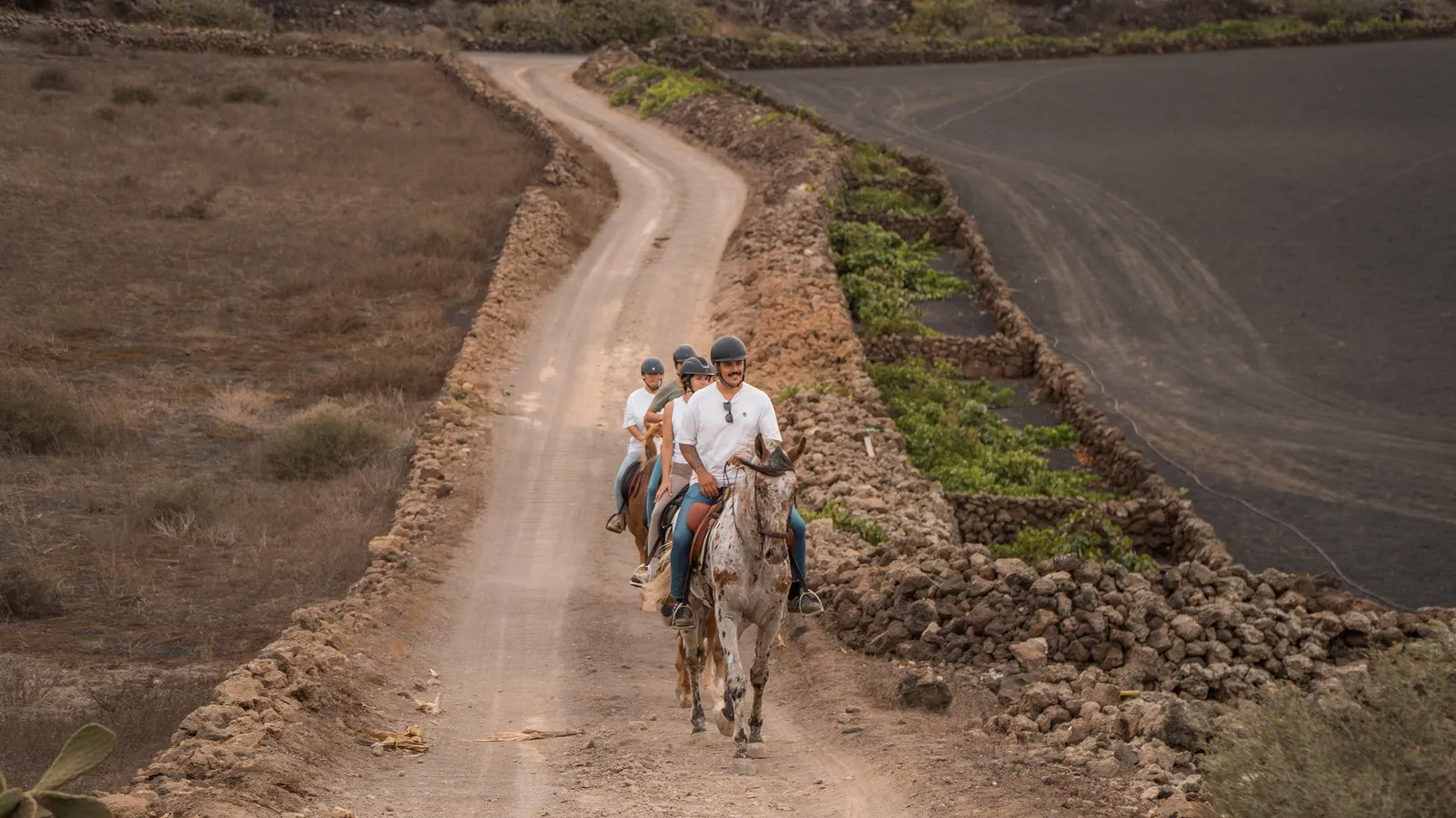
The one thing the landscape truly rewards is going slowly. From a car window, all that lava is a striking backdrop that slides past in a few minutes. But out in it on foot, on a bike or on horseback, the scale and the silence land properly, and you start to notice the small things: the pale green lichen creeping across the black rock, the sudden bright green of a fig tree tucked into a sheltered hollow, the way the light moves across the ground and changes the colour of it hour by hour.
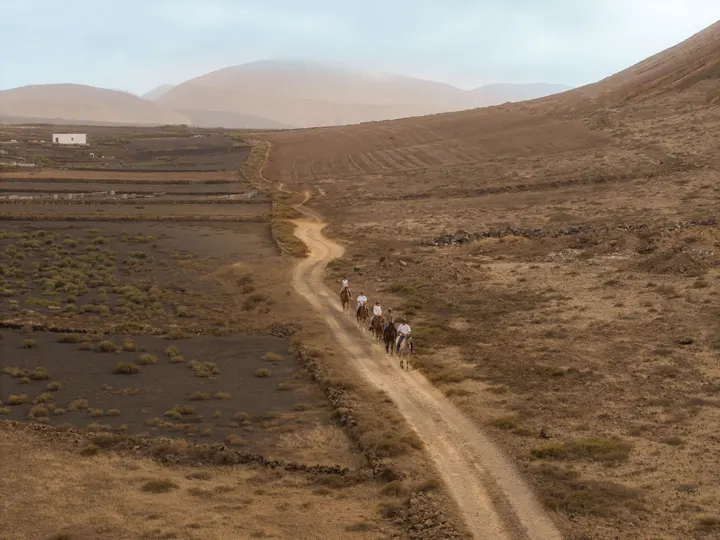
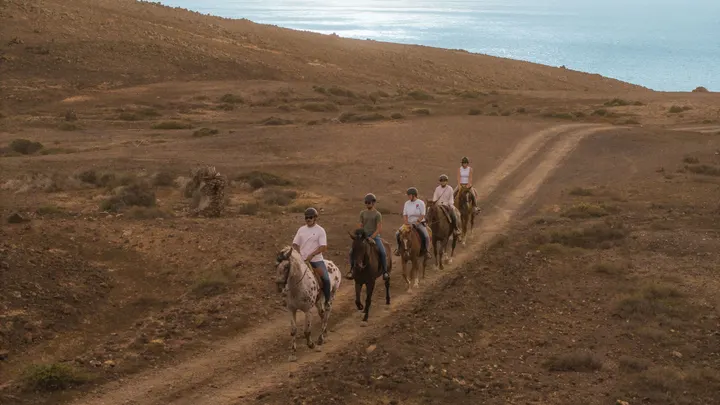
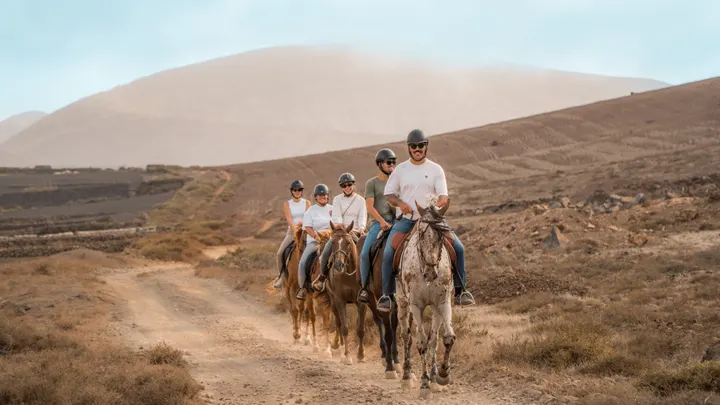
Our 1-hour ride exists for exactly that reason. It heads out across the open country at the pace of a walking horse, with a volcano in view, and it turns out that a walking horse is just about the right speed to take a landscape like this in. No experience is needed to come along, and there is no better way to feel the size of the place than to be quietly moving through it with the only sound the wind and the hooves on the ground.
And if riding is not for you, the same landscape is there for anyone willing to park the car and walk a little way into it. Either way, the real advice is simple: do not spend your whole week at the coast. The best of Lanzarote is in the middle, black and red and silent, and it looks like nowhere else on earth.
If you fancy it