Planning your trip
A wet or windy day in Lanzarote: what to do
It rarely rains for long here, and the wind always has a sheltered side. How to turn the odd grey or blustery morning into a good day out anyway.
11 June 2026 · 4 min read
Lanzarote does not get much rain. It is one of the driest inhabited places in Europe, and when rain does come it rarely settles in for the whole day the way it can back home. A grey morning here usually burns off by lunch, and a windy one just means one side of the island is having a better time than the other. Either way, you almost never have to write the day off. You just have to play it right.
Here is how to turn a grey or blustery start into a good day out.
Remember that rain rarely lasts
The single most useful thing to know is that a wet spell here is normally short. If you wake up to grey skies and a bit of drizzle, the odds are genuinely good that it clears by early afternoon. So the move on a damp morning is to flip your plan: do the indoor thing first thing, and keep the beach or the walk in your back pocket for later, rather than the other way around. Fighting the weather rarely works; waiting it out almost always does.
Head underground and under cover
When it is properly wet, the island’s caves and lava tubes are the obvious and brilliant call, dramatic, cool and completely unbothered by whatever the sky is doing above them. The two great cave attractions in the north, one built around an underground lagoon and the other a tunnel you walk down into, are among the best few hours on the island in any weather, let alone the rain.
Beyond the caves, Lanzarote has more indoor and covered options than a small island has any right to, largely thanks to the artist César Manrique, whose work shaped the whole look of the place. His former home, built into a series of volcanic bubbles, is a genuinely surprising visit. There are galleries, small museums, a castle or two, and the visitor centres dotted around the national park, all of which make an easy hour or two out of the weather.
Chase the sheltered side of the island
Wind is far more common here than rain, and the trick with wind is pure geography. The north and west coasts take the brunt of the Atlantic breeze, which is glorious for surf, kitesurfing and drama at Famara, and much less so for a calm afternoon on a towel.
When it blows, simply cross to the sheltered south and east. The resort beaches around Playa Blanca and the bays down towards Papagayo sit in the lee of the land, and the water there stays noticeably calmer and clearer when the north is being battered. On a blustery day, that one decision, moving to the other side of an island that takes half an hour to cross, can be the whole difference between a hunched-up, sand-in-the-sandwiches afternoon and a lovely one.
Wander a town or a market
A grey morning is a fine time to swap the beach for a town, which you might otherwise never slow down enough to enjoy. The old capital, Teguise, is full of cobbled streets and history and hosts a big Sunday market. The current capital, Arrecife, has an appealing waterfront and the pretty Charco de San Ginés, a tidal lagoon ringed by little white houses and cafés. Wandering, browsing, and settling in somewhere good for a long lunch is a perfectly respectable way to wait out a passing shower, and it costs nothing but the odd souvenir.
Eat like it is the plan, not the fallback
On a wet day the food can become the outing rather than a pit stop. Lanzarote grows wine in the black volcanic ash of La Geria, and a visit to a bodega for a tasting is an ideal grey-afternoon plan: you are indoors, or under cover in a courtyard, learning something, and the landscape of thousands of vines in their little ash hollows is worth the trip on its own. Pair it with a long lunch of local fish and papas arrugadas and you have quietly turned a write-off morning into one of the better afternoons of the trip.
And when it clears, as it usually does
Because the weather here moves through rather than sitting still, the whole art of a Lanzarote day is keeping your plans loose. Do the sheltered, indoor, cave-and-market things while it is grey, and keep the outdoor highlights ready for the moment the sky opens up, which it usually does, often dramatically, by mid-afternoon.
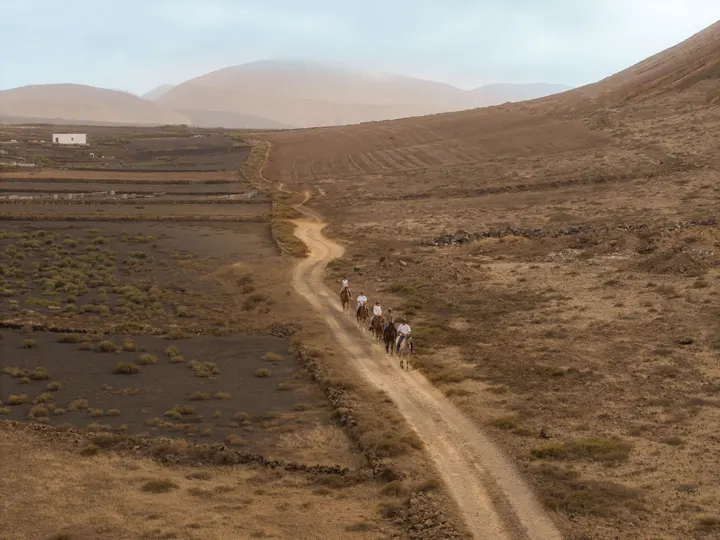
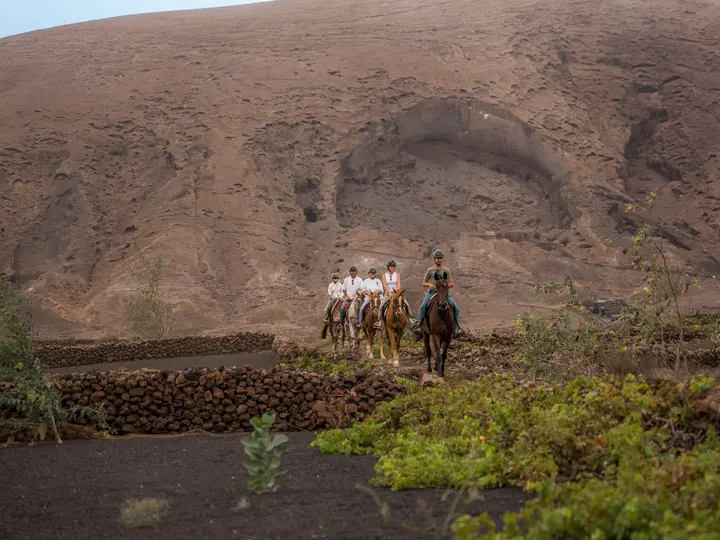
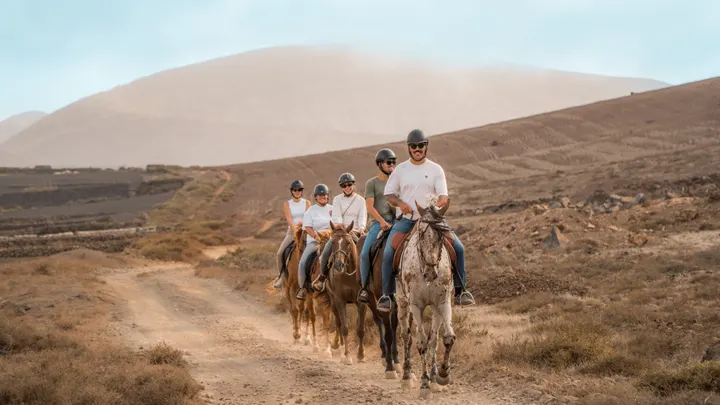
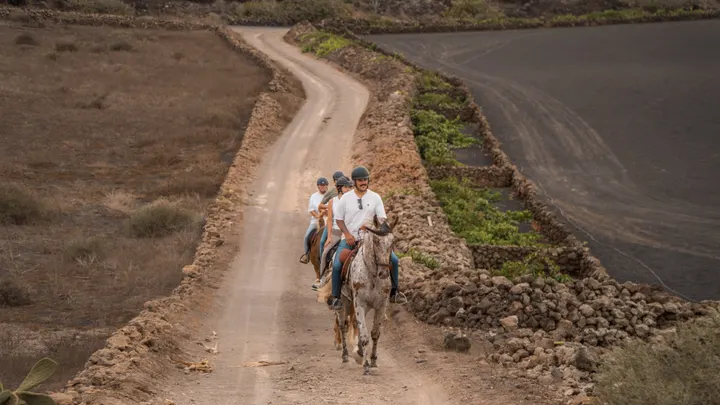
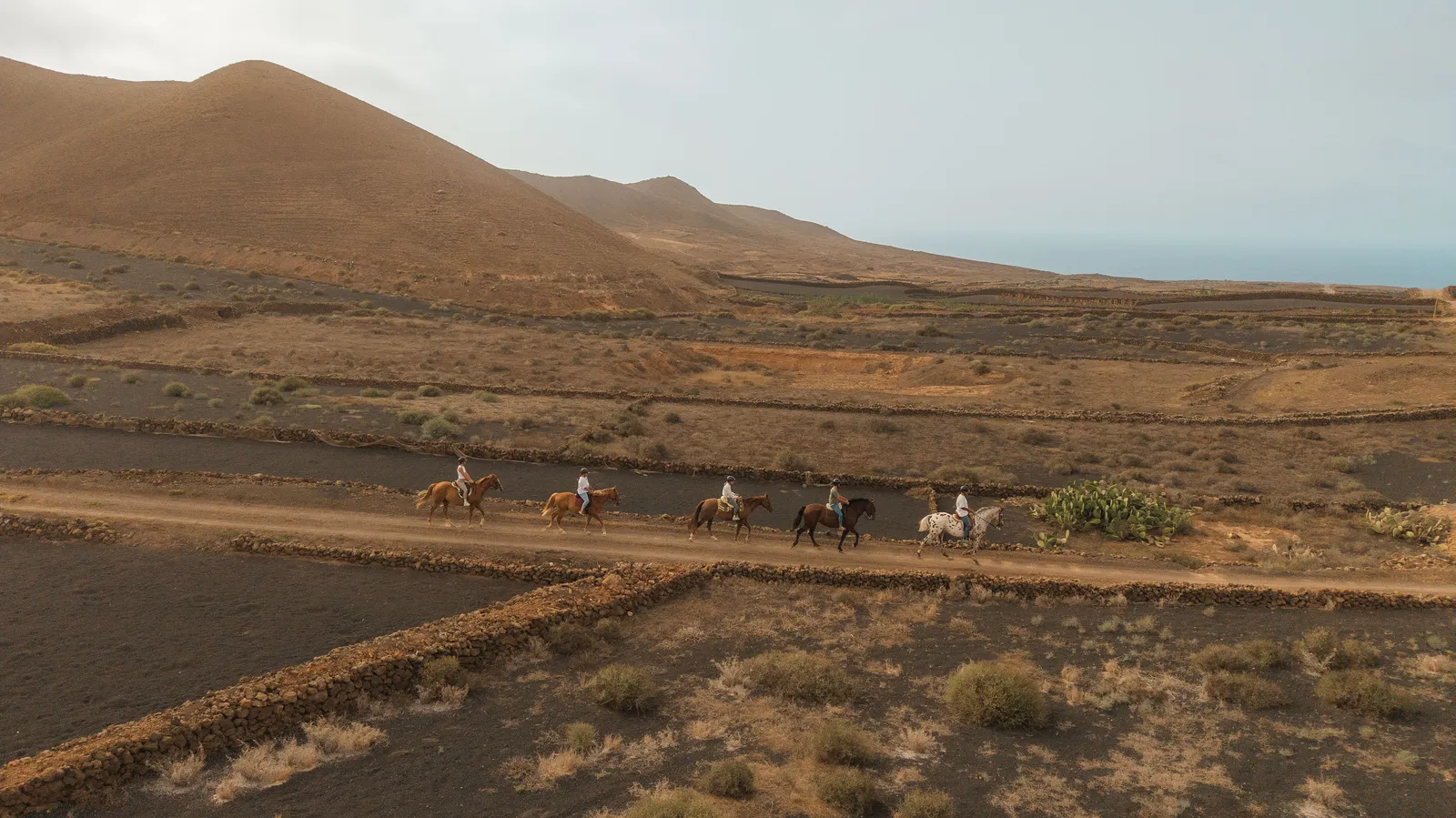
Our rides run in all sorts of weather and only stop when it genuinely is not safe or kind for the horses, so a bright, washed-clean afternoon after a grey start is often a beautiful time to be out, with the light sharp and the crowds thinned. You can see how it all works on the rides page if it appeals. And if it does not, do not worry: on this island, the sun is usually back before you have finished your coffee.
Common questions
- What should I wear to go horse riding?
- Long trousers and closed shoes you can walk in. Not flip-flops, as they leave your foot unprotected. A hat and sun cream are a good idea most of the year.
- Are helmets provided?
- Yes. Certified riding helmets are included and everybody wears one. There is nothing you need to buy or bring.
- Is there a weight limit for riders?
- Yes, for the horse’s sake: our limit is 120 kg per rider. Tell us your weight when you book and we will confirm the right horse for you before you come, so nobody is turned away at the yard. We would rather sort it in advance than on the day.
- What happens if the weather is bad?
- In high wind or extreme summer heat we may move your time, and we do not ride when it is not safe or kind for the horses. If that affects your booking we let you know in advance, not when you arrive.
If you fancy it